"Why do I use my paper, pen and ink?"
How attending a lecture about church music in 16th century England led me to better appreciate the academic research of the first Chief Rabbi of Israel.
How attending a lecture about church music in 16th century England led me to better appreciate the academic research of the first Chief Rabbi of Israel.
Remember the artisans forgotten because of the Industrial Revolution.

After more than two years of researching color, I'm reminded of how little I know.

An overview of what we think we know about the origins of Ultramarine Blue in Europe.
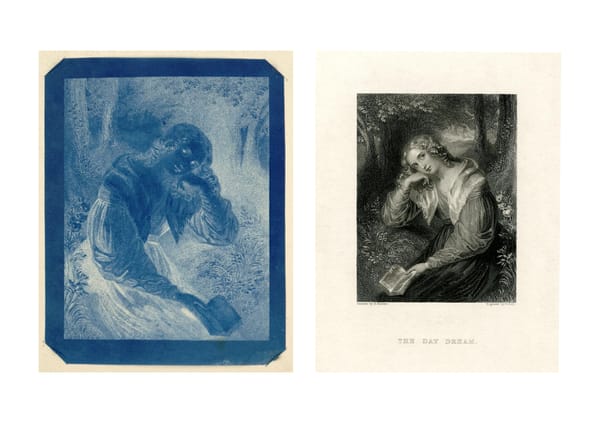
The inventor of the cyanotype used the annual literature yearbook "Friendship's Offering" as the source of many of the images he experimented on.
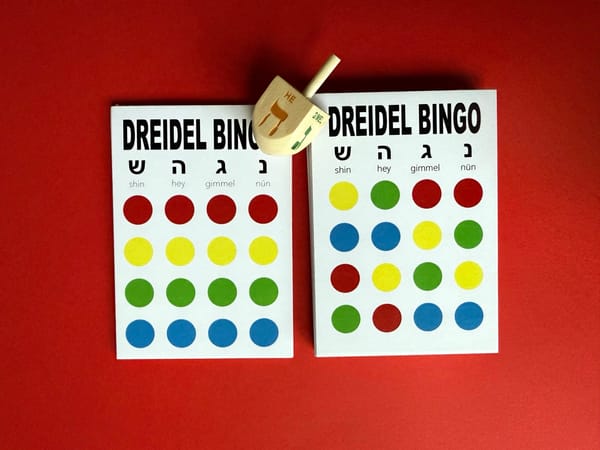
A very Colorphilia way to attempt to understand the idea of "fun".

A serious proposal to change the name of turkey fowl to "genny".

Finding the hidden message in the "apple-blue, sea-green" hue.
Announcing a book about the Jewish origins of Robin Hood and creating hope in a time of despair.

Why is Kṛṣṇa blue, what was the color of Biblical creation, and some other (un)related questions
How did they make blue glass beads in Lithuania in the 1st century?
The relationship between pastels and macarons.
I found a small error on a placard in the Jewish Museum in Rome.
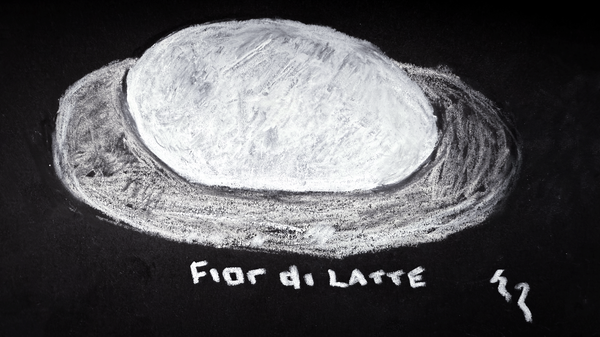
Thoughts about cheese in Italy.
Contains no practical advice or useful information.
A dispatch from Madrid, about Vilnius, Paris and Toulouse.
A flash sale and a reexamination of different types of spectra.
Today is my birthday and I'm leaving Chicago in June.

No answers guaranteed.
The Polka-Dot was inspired by the musical notation used by composers of polkas to create a staccato effect which mimicked the newly invented telegraph.
Several half-baked ideas.
Indigo is a pigment, not a color.
An exploration into the phrase "salt of the earth" in Matthew 5:13.
Venus, the Renaissance, salty language, and the color blue.
Why is "amarilla", the Spanish word for yellow so different from all other words for yellow?
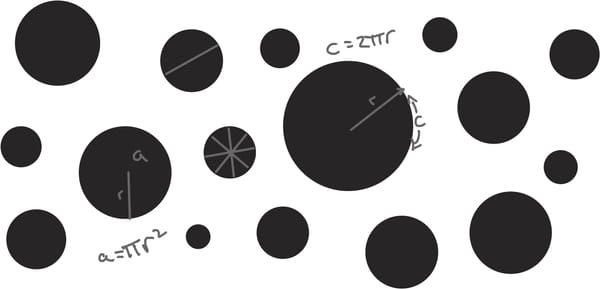
Featuring shapes, colors, pastries, mathematicians, birds, and priests.
A (hopefully) final newsletter about tulips.
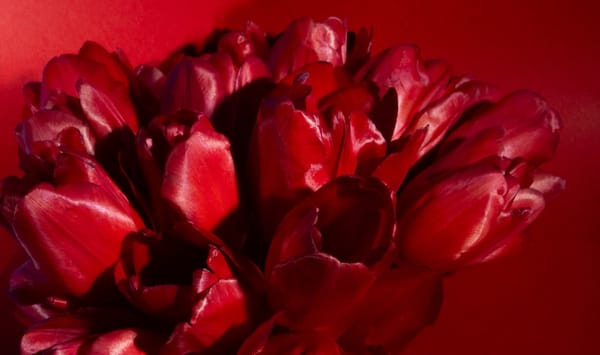
Tulips have a much longer and more illustrious history than we previously thought.
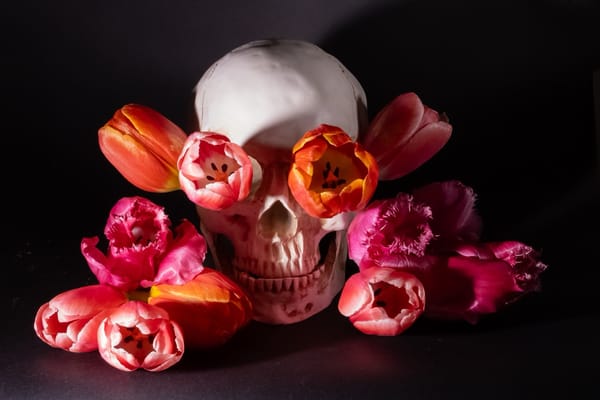
In February 1637, the Dutch futures market had a reset on all outstanding contracts for tulips. The prices had reportedly been growing an unprecedented rate, and there was risk of systemic collapse of defaulted contracts.
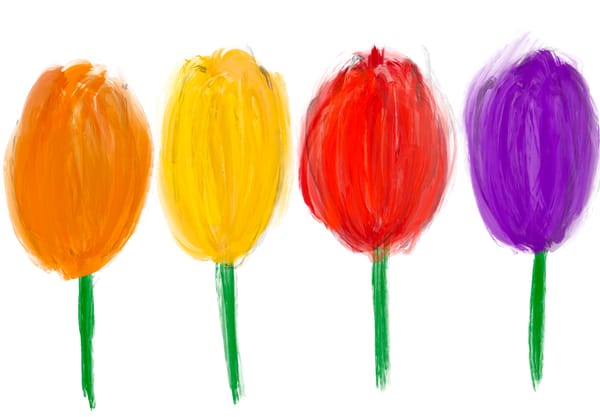
King Midas voted for Pan, and Apollo became so enraged, he turned Midas' ears into donkeys' ears. Midas was embarrassed and tried to hide up the ears by wearing some sort of head covering, which likely resembled the tulip in a closed state.
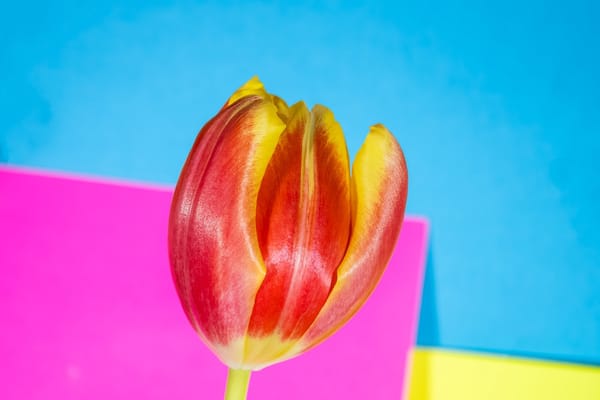
This month on Colorphilia, each week, we will be focusing on a different aspect of tulips. This week, I share the likely original meaning of the flower, and how the etymology became so tortured, convoluted, and misunderstood.
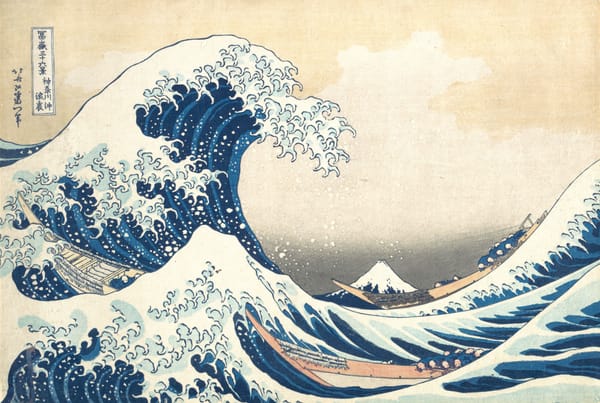
Some thoughts about my new niece's name.
I began researching this week's newsletter with a simple question: did Robin Hood wear a red hat? It led me down an existential rabbit-hole, and led to a conclusion which posed a completely different, albeit outlandish and preposterous, question.
* Dr. Seuss published more than 60 books in his life, won an Academy Award, a Pulitzer, and several Primetime Emmys. He also has a medical school named after him.
People have always waited for some green during this holiday season.

Announcing The Green Issue

"Black Friday" (the shopping day) may have inadvertedly borrowed its name from another Black Friday (November 22, 1963).

The Turkey (fowl) was named after the color of Turquoise (stone) whose name predated any connection to Türkiye (country).

This also discusses scientists and color.

How the color blue became associated with depression.
The color "teal" comes from the "teal" species of ducks.
Using the musical chromatic scales to create beautiful chromatic scales of color.
A Colorphilia Rosh Hashanah sermon
Who knew that a simple word could be so complex.
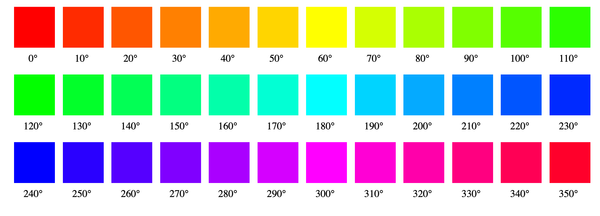
A reexamination of Newton's connection between the music and color.
The art of being completely lost in translation of citrus fruits.
An incomplete newsletter about William Shakespeare and the color blue.
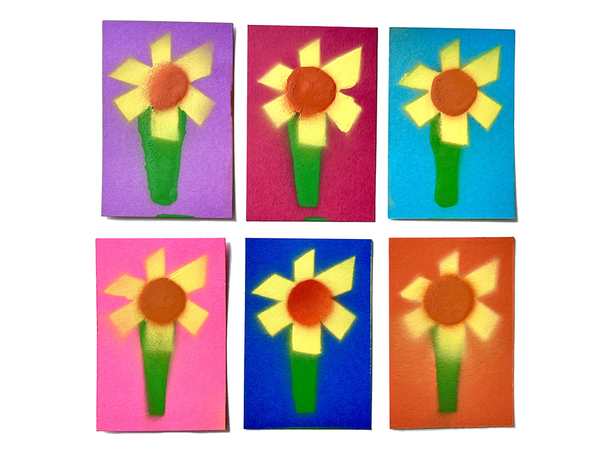
A follow-up to last week's newsletter about Vincent van Gogh and sunflowers.
I've spent months reading van Gogh's letters, and I just created a few collections of sunflowers inspired by him.

Glow sticks are ephemeral fluorescent color lights, inspired by eons of evolution.
An iconoclastic exploration into the biblical colors of tekhelet and argaman.
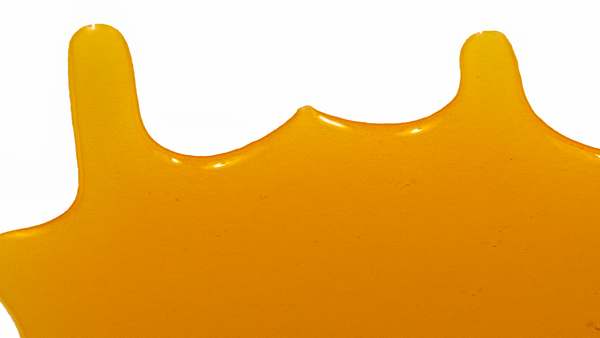
Amber comes from the word ambrosia; ambrosia was associated with honey; amber is the color of honey.
The shift from beeing producers of honey to beeing pollinators.
Including quotes from noted philosophers like Plato, Descartes, Kierkegaard, and Kermit the Frog.
An update and correction to last week's newsletter.
Spoiler alert: The little boy in the song was Cupid.
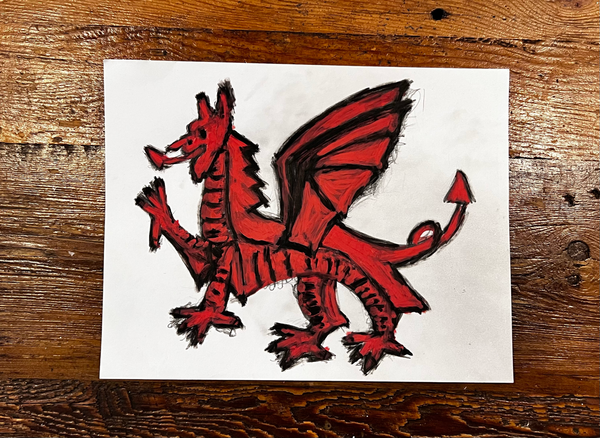
Or: A very basic introduction to Welsh color words by someone who doesn't speak the language, yet.
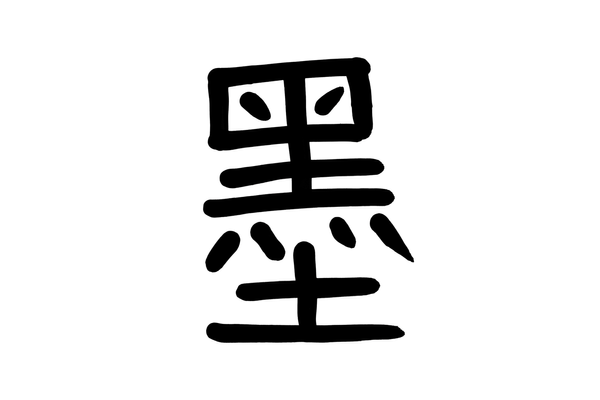
or "How reliance on advances in technology impedes innovation."

A few Greek and Latin phrases about drawing with light.
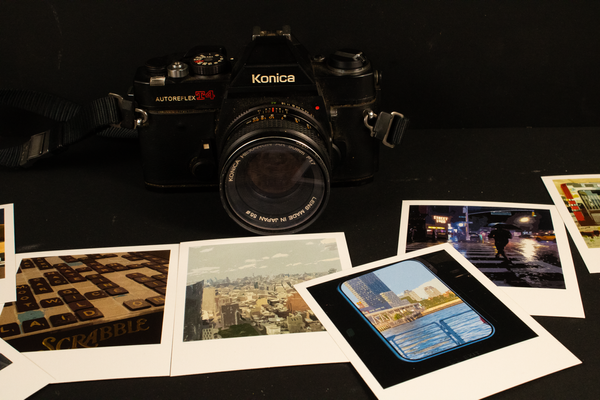
The answer is yes.

Some wild theories about the color white.
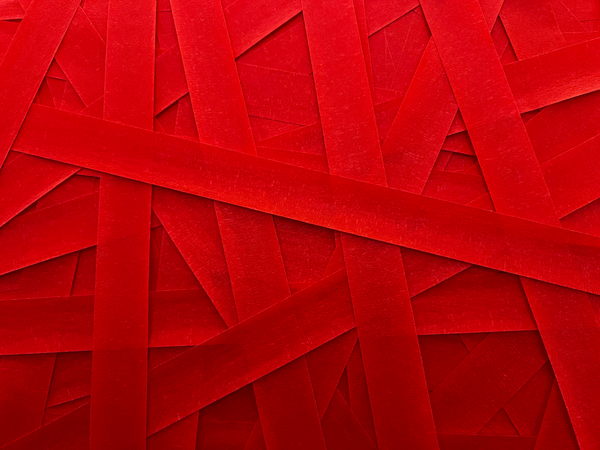
Red-tape is a euphemism for unsolvable complexities. I almost agreed.

Some thoughts about the sky being blue.

Magenta has a much more interesting etymology than I had previously written.
An exploration of the modern metaphor.
Modern milk is a 20th century invention and most ethnicities are lactose intolerant.
Distinguishing between hype and functionality.
An etymology of many things golden.
Scheherazade, Alice, Dorothy, and Wendy.
This newsletter includes an intro to computer science, a quick explainer in vinification (winemaking), swine-ish sailors, biblical leprosy, the Passover Seder, bright-eyed goddesses, tithing, and raisin wine.
Please don't buy paint colors for your home simply because they were popular during the 18th and 19th centuries.
The Oxford English Dictionary has dozens and dozens of definitions of shade. I try to understand a few of them.
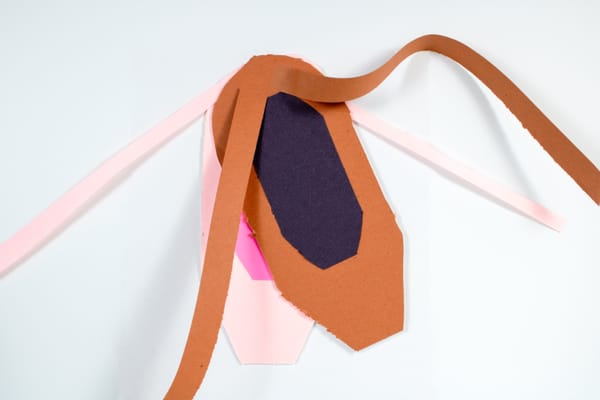
Spoiler: This isn't just about the color of ballet shoes
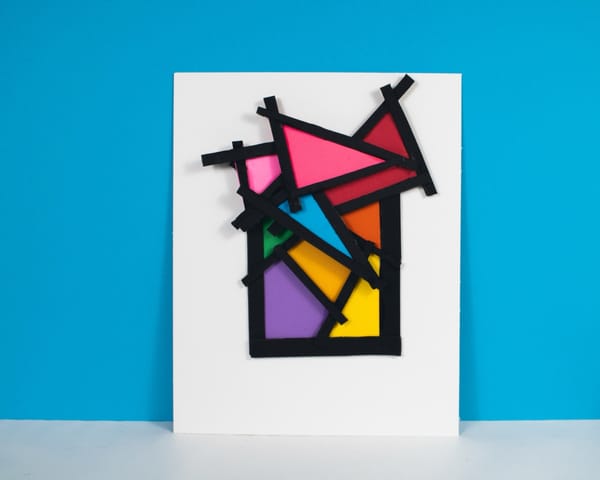
Warning: Art is not edible.
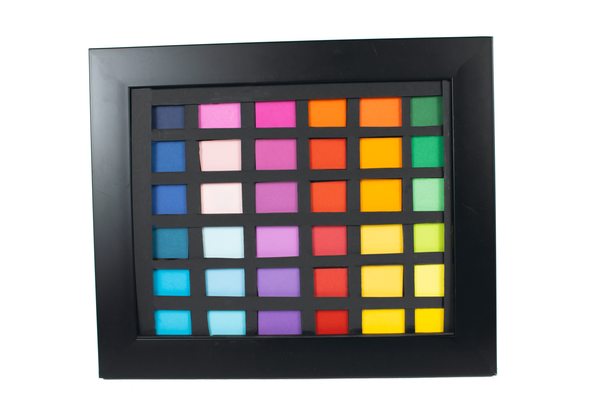
While the simple question “what is your favorite color?” seems rather straightforward, three out of the five words are anything but. And here are roughly 5600 words to prove it.
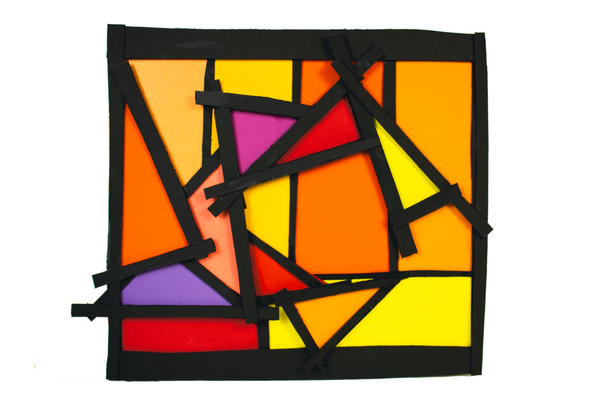
As I mentioned in my initial newsletter, I tend to go down a lot of random “rabbit holes” during my research. It seemed fitting, then, that I began this time with a theory I had about orange carrots.
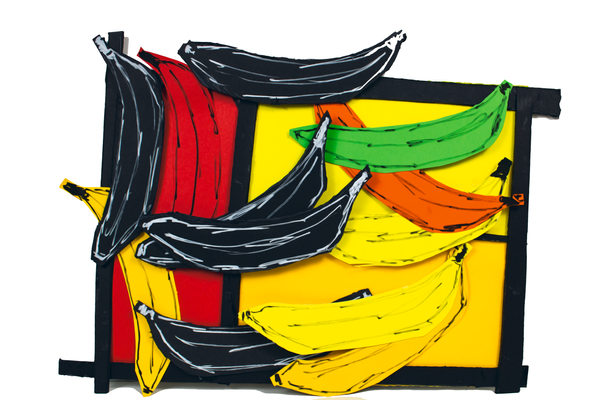
In under a half century, the humble banana went from being an exotic fruit to an eponymous color. At its peak, the fervor for this fruit could only be compared to that of the Dutch Tulip Mania of the 1630s, albeit in a very different way.
As a general rule of thumb, color is always mistranslated in the Bible. It’s not as much that they didn’t have the same colors that we do, it’s more that our concept of color is muddled.
The etymology of the word blue includes everything from brothels to mermen to monsters with twelve feet and six heads to the effects of magic herbs, but not necessarily in that order.
If I’ve had a conversation with you over the past two months in person, I’ve probably randomly started talking about the history of using the word “bleu” in French as a profanity...